One of you snores. The other one is awake at 2 a.m., doing the arithmetic on how many hours are left. Here’s how we work out what’s causing the noise — and when a laser is the right answer.
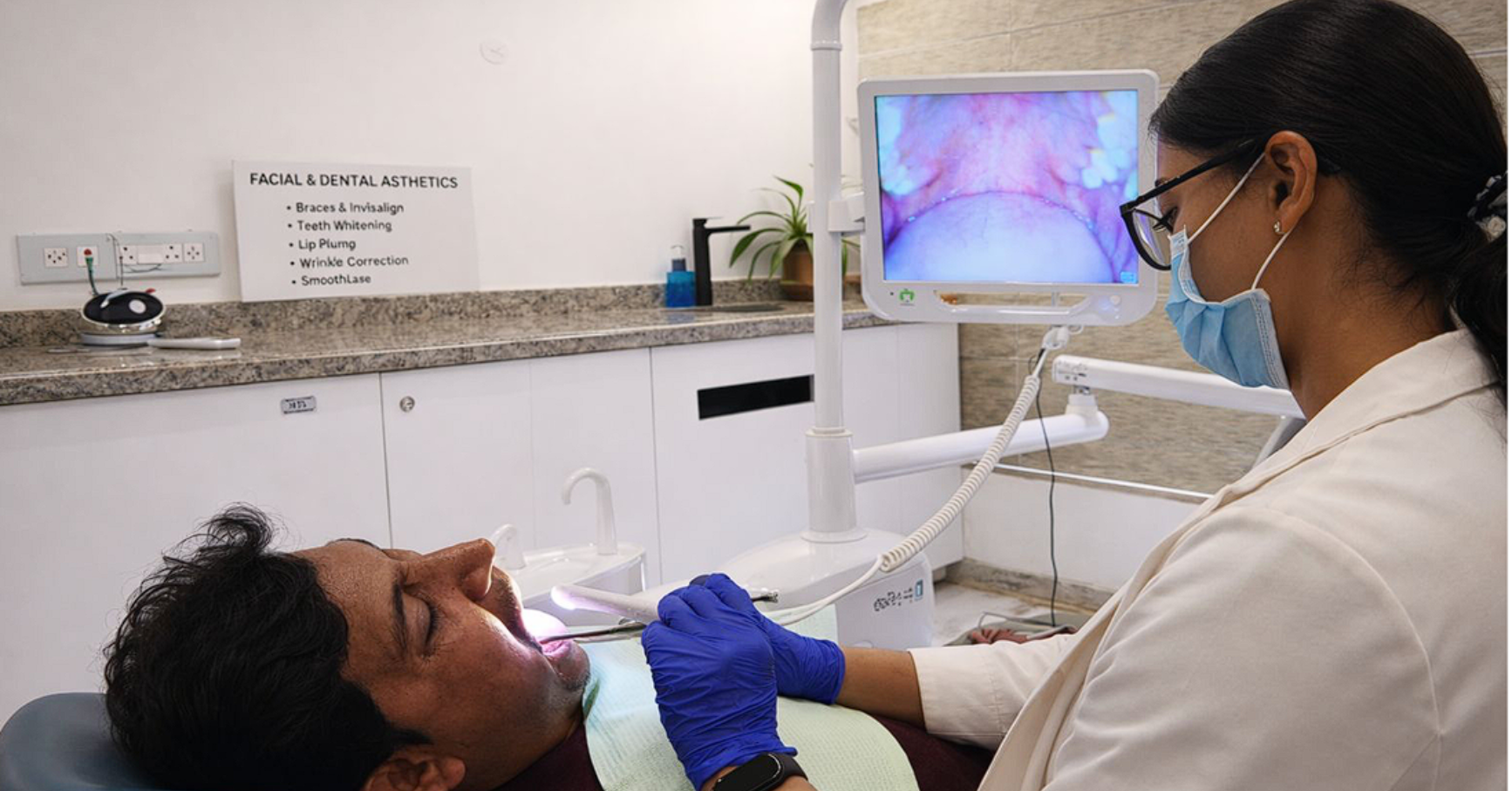
Assessment first, treatment second — the airway is examined and reviewed on screen before any laser is discussed.
Most people don’t come to us because of the sound. They come because of what the sound has cost them: the spare room, the short temper by Wednesday, the feeling of having slept without ever quite resting. By the time snoring reaches a clinic, it has usually stopped being a joke in the family group chat.
The honest starting point is this — snoring is a symptom, not a diagnosis. Two people can make the same noise for completely different reasons, and the treatment that helps one of them may do nothing for the other. So before we talk about lasers, we look at your airway.
Snoring fragments sleep — often for two people at once. Broken sleep tends to show up in daylight rather than at night: fatigue, thin concentration, that low-grade brain fog where nothing is wrong but nothing is sharp either.
It can also be a signal. In some cases snoring is associated with obstructive sleep apnea or another sleep-related breathing problem, which is a medical condition and needs a proper diagnosis — not a cosmetic fix. That’s the main reason we don’t treat snoring on request. We assess it first.
“Treating the sound without understanding the cause is how people end up disappointed — or worse, reassured when they shouldn’t be.”
Air moving through a narrowed upper airway makes soft tissue vibrate, and that vibration is what you hear. During sleep the soft palate and the tissues around it relax; the looser they are, the more they flutter. Anatomy varies enormously from person to person, which is why there is no single cause and no single fix.
For patients whose snoring is mainly linked to laxity and vibration of the soft palate, Fotona NightLase® may be an appropriate option. That “mainly” is doing real work in the sentence.
NightLase® is a non-invasive laser treatment. Controlled laser energy is delivered to selected tissues in the oral cavity and soft palate, with the aim of stimulating collagen remodelling and gradual tightening of those tissues. No cutting, no injections.
Your doctor looks at your snoring pattern and your airway, and decides whether NightLase® is a sensible option for you at all.
A short in-clinic procedure. Energy is applied to the relevant soft tissues; you sit up and go home afterwards.
This is the slow part. Collagen remodelling happens over the following weeks — nothing changes overnight.
Where tissue vibration reduces, breathing can become quieter and sleep quality may improve. Results vary between individuals.
Roughly 20 to 30 minutes, in the clinic, in ordinary clothes. There’s no surgical cutting and no injections, so there’s no surgical recovery period — most patients go back to their normal day straight after. A full course usually means several sessions spread over a few weeks; how many depends on your assessment, not on a package.
The soft palate sitting tighter, the passage behind it more open. A useful picture of what remodelling can do — and one patient’s airway, not a promise.
Before and after, same patient. An individual result — outcomes vary between patients.
Any of these and the sensible next step is an assessment — not a treatment you picked yourself.
Pauses, gasping, or choking noises reported by a partner. This needs evaluation before anything else.
Eight hours in bed that never feel like eight hours of sleep — plus afternoon fog or nodding off unintentionally.
Separate rooms, earplugs, a partner losing sleep too. Snoring has two patients more often than one.
Over-the-counter fixes have been tried for months with no real change in the noise or the tiredness.
This is the question we get most, so plainly: no. They do different jobs, and one does not substitute for the other. If you have diagnosed obstructive sleep apnea and you’re on CPAP, please don’t stop or swap it without medical guidance.
| NightLase® | CPAP | |
|---|---|---|
| Mainly for | Snoring linked to soft-palate laxity and vibration | Medically diagnosed obstructive sleep apnea |
| Nightly equipment | None | Mask and machine, every night |
| Effect over time | Gradual, over weeks after treatment | Works on the nights it is used |
| Decided by | Airway assessment | Sleep study and diagnosis |
You may be considered for NightLase® if your snoring appears to be driven mainly by vibration or laxity of the soft palate, if you want a non-surgical option, or if you’d rather avoid injections and downtime. Suitability is decided after an airway assessment — never before one.
And if your symptoms point towards significant sleep apnea or something else underlying, we’ll say so. That may mean further evaluation, a formal sleep study, or a referral before any treatment.
It’s a slower answer, but it’s the right one.
Snoring treatment at Ogha Health starts with the person, not the sound: a personalised airway assessment, doctor-led planning, non-surgical options where they genuinely fit, and a straight answer about whether NightLase® is right for you.
Sometimes that answer is no. We’d rather tell you that at the consultation than after four sessions.
The treatment is designed to be non-invasive and most patients tolerate it comfortably. Your clinician will tell you what to expect in your specific plan.
No surgical downtime. Patients can generally return to normal daily activities after a session.
It varies. The number comes out of your individual treatment plan and clinical assessment rather than a fixed course.
Not necessarily. CPAP remains an important treatment for many patients with diagnosed obstructive sleep apnea. Any change should follow medical assessment, not a hunch.
Changes tend to develop gradually over the weeks after treatment as tissue remodelling occurs. Results vary between individuals.
Yes. Snoring can be associated with obstructive sleep apnea or other conditions that need proper diagnosis. It’s worth checking rather than assuming.
If snoring is wearing down your sleep, your energy, or your relationship, the first step isn’t a treatment — it’s finding out what’s causing it. Come in and we’ll assess your airway.
Book a snoring consultation at oghahealth.com/appointment.
3rd Floor, above 45th Avenue, P
Janardhan Reddy Nagar, Gachibowli,
Hyderabad, Telangana 500032
040 4917 0949
+91 91522 25444
This article is general information, not a substitute for medical consultation. Snoring can be associated with obstructive sleep apnea or other conditions requiring proper diagnosis. Treatment suitability and outcomes vary between individuals. Please consult a qualified clinician for personalised advice.
 Chat
Chat